The Peet's Coffee Franchise Guide (2025)
Understanding licensing costs, investment requirements, and the business of craft coffee
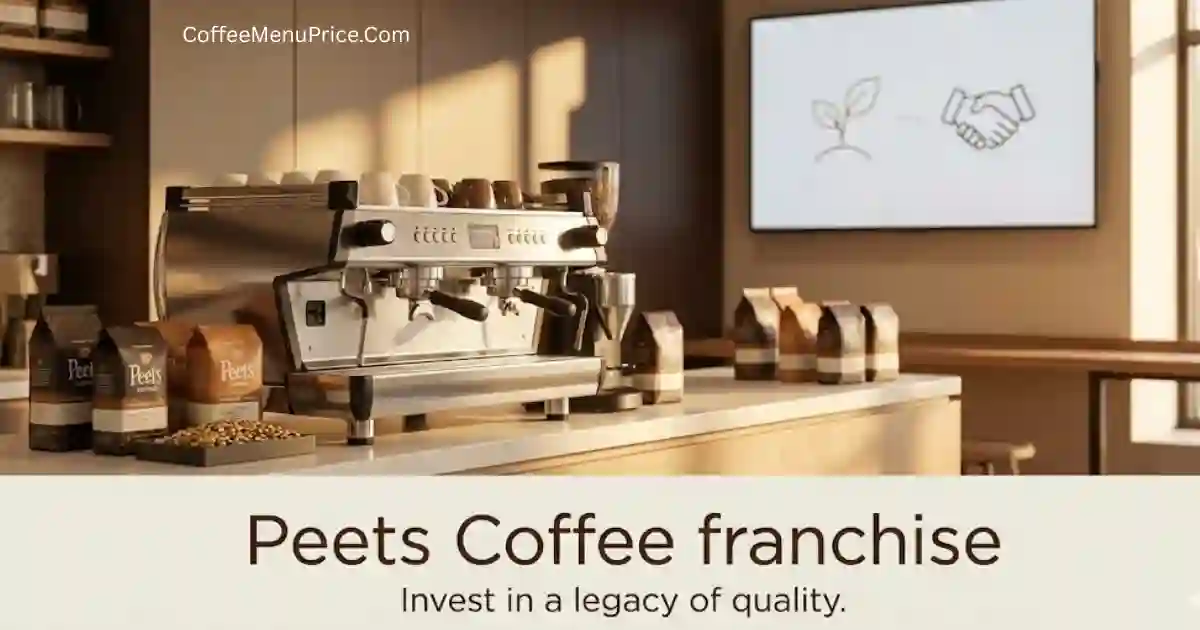
For entrepreneurs looking to enter the booming specialty coffee market, the idea of opening a Peet's Coffee franchise is often the gold standard. As the company that arguably started the craft coffee revolution in the United States long before Starbucks became a household name, Peet's carries a legacy of quality, deep-roasted flavor, and loyal customers. In 2025, with the coffee shop industry projected to grow steadily despite economic fluctuations, aligning yourself with a heritage brand seems like a surefire path to profitability.
However, the path to owning a location bearing the name of Alfred Peet is not as straightforward as buying a sandwich shop franchise. There are distinct differences between a traditional franchise model and the specific licensing strategy employed by premium coffee brands. If you are researching the costs, requirements, and reality of investing in a Peet's Coffee franchise, this guide provides the transparent data you need to make an informed business decision.
The Reality: Franchise vs. Licensed Partner
The first and most critical piece of information for potential investors is that Peet's Coffee does not technically offer a traditional franchise program for individual street-side locations. Unlike Dunkin' or The Coffee Bean & Tea Leaf, you cannot simply pay a fee to open a standalone Peet's on a street corner in your neighborhood.
Instead, Peet's operates primarily under a Licensed Partnership model. Most standard locations are company-owned and operated to maintain strict quality control over the supply chain and barista training. However, they do offer licensing opportunities for non-traditional venues. These include:
- Universities and Colleges: Campus cafes serving high-volume student traffic.
- Airports and Transit Hubs: High-visibility locations managed by large hospitality groups.
- Grocery Stores: Kiosks located within premium supermarkets.
- Corporate Campuses: Private cafes for employees of large tech or finance firms.
According to industry analysis from Forbes Business Council , brands often choose this model to protect their intellectual property and brand equity while expanding their footprint with minimal capital risk.
Estimated Costs and Financial Requirements
Even though you may be looking at a licensing agreement rather than a standard Peet's Coffee franchise, the financial barrier to entry is significant. Peet's looks for partners with substantial experience in food service and deep pockets. While public disclosure documents for 2025 are specific to the contract, industry estimates for similar premium coffee licensing tiers suggest the following investment ranges:
Initial Investment Breakdown
To open a fully branded licensed store, the total investment typically ranges from $250,000 to $800,000+ depending on the size and location (e.g., a small kiosk vs. a full airport cafe).
- Licensing Fee: Often between $20,000 and $30,000 upfront.
- Build-out and Equipment: High costs for espresso machines (La Marzocco is standard), brewing equipment, and branded signage.
- Inventory: Peet's requires partners to source all beans and branded cups directly from their supply chain.
- Liquid Capital: Prospective partners usually need at least $150,000 to $200,000 in liquid cash.
It is worth noting that licensed partners typically pay a royalty on gross sales, usually around 5-7%, back to the parent company. This is comparable to the Entrepreneur Franchise 500 standards for top-tier food and beverage brands.
Why Investors Seek Peet's (The Brand Value)
Why go through the trouble of a complex licensing agreement when other franchises are easier to buy? The answer lies in the brand's cult following. Peet's Coffee was founded in Berkeley, California, in 1966 by Alfred Peet, a Dutch immigrant who was appalled by the quality of coffee in the U.S. He introduced darker roasts and higher quality Arabica beans.
Product Superiority: Unlike fast-food coffee chains that prioritize speed and sugar, Peet's prioritizes the roast. They operate a "roast-to-order" system even for their commercial accounts, ensuring that beans are not sitting in warehouses for months. This commitment to freshness creates a loyal customer base willing to pay a premium price per cup, which drives higher margins for the business owner.
The "We Proudly Brew" Program: For smaller operators or existing cafes that cannot afford a full license, Peet's offers a wholesale food service program. This allows a business (like a bakery or hotel) to serve Peet's coffee and display "We Proudly Brew Peet's Coffee" signage without the massive overhead of a full franchise build-out.
Alternatives to a Peet's Coffee Franchise
If you are an individual investor looking to open a street-side coffee shop and find that you do not qualify for a Peet's license, there are several strong alternatives in the market in 2025. These competitors offer traditional franchising models:
1. The Coffee Bean & Tea Leaf
A direct competitor to Peet's in terms of quality and heritage. They offer traditional franchise opportunities with a focus on Southern California vibes and high-quality tea blends.
2. PJ's Coffee of New Orleans
Known for their cold brew and small-batch roasting, PJ's has been aggressively expanding. They offer a more accessible entry point for individual owner-operators compared to the strict corporate structure of Peet's.
3. Scooter's Coffee
Focusing on speed and drive-thru models, Scooter's is one of the fastest-growing franchises in the Midwest. While the coffee profile is different from the dark roasts of a Peet's Coffee franchise, the unit economics of a drive-thru kiosk are highly attractive.
Marketing and Operational Support
One of the major benefits of securing a partnership with Peet's is the operational support. The company is owned by JAB Holding Company, a massive conglomerate that also owns Keurig Dr Pepper and Panera Bread. This means partners have access to:
- World-Class Supply Chain: Consistent delivery of beans, syrups, and pastries.
- Training Programs: Comprehensive barista training that ensures your staff can pull shots that meet the "Peetnik" standard.
- Seasonal Campaigns: access to high-budget marketing materials for Holiday blends, Summer Cold Brews, and limited-time offers.
According to the Specialty Coffee Association , ongoing barista training is the single biggest factor in customer retention for specialty coffee shops. Peet's robust training modules mitigate the risk of quality slippage.
Is Investing in Coffee Still Profitable in 2025?
The coffee market remains resilient. Despite inflation, consumers view their daily coffee as an "affordable luxury" they are unwilling to cut from their budgets. A successful location can see gross revenues ranging from $500,000 to over $1 Million annually, depending on foot traffic. However, labor costs and rent are significant factors.
A Peet's Coffee franchise (or licensed store) benefits from a higher average ticket price due to the premium nature of the brand. Customers are accustomed to paying $5 to $7 for a handcrafted beverage, which helps offset operational costs better than discount coffee chains.
Frequently Asked Questions (FAQs)
Can I buy a Peet's Coffee franchise for my town?
Generally, no. Peet's does not franchise to individuals for standard street locations. They focus on company-owned stores and licensing for specific venues like airports, universities, and hospitals.
How much does it cost to open a licensed Peet's location?
While variable, you should expect an initial investment between $250,000 and $800,000. This includes construction, equipment, and licensing fees. You will also need significant liquidity.
Who owns Peet's Coffee?
Peet's is privately held by JAB Holding Company, a German conglomerate that manages a vast portfolio of coffee and food brands. This ownership structure is why they prioritize corporate control over franchising.
What is the "We Proudly Brew" program?
This is a foodservice solution where existing businesses (like a hotel breakfast bar or a bookstore cafe) can serve Peet's coffee and use their branding without opening a full-fledged Peet's store. It is the most accessible way to sell the brand.
Does Peet's offer training for partners?
Yes. Peet's provides extensive training on coffee origins, roasting philosophy, and beverage crafting to ensure that every licensed location meets the high standards established by Alfred Peet.
Final Thoughts
While you may not be able to purchase a Peet's Coffee franchise in the traditional sense, the brand remains a titan in the industry. For institutional investors or those with access to non-traditional real estate like campuses or transit hubs, a licensing agreement with Peet's is a prestigious and potentially lucrative portfolio addition.
For the individual entrepreneur, understanding the distinction between franchising and licensing is vital. If your heart is set on the "Peetnik" culture, look into the "We Proudly Brew" program. Otherwise, exploring other specialty coffee franchises may provide the ownership freedom you desire while still capitalizing on the world's insatiable thirst for high-quality caffeine.
Ready to compare coffee prices yourself?
Start comparing prices across countries and save on your daily caffeine fix!
Start Compare Manually